


Cognitive stimulation therapy: when the brain learns to reorganize itself

Cognitive stimulation therapy (CST) is currently one of the most effective non-pharmacological therapies for people with mild to moderate dementia.
The therapy focuses on joint activities. In small groups or in an individual setting, targeted exercises are carried out twice a week for 14 weeks. Those affected are accompanied by occupational therapists, trained nursing staff or family members.
The exercises include orientation exercises, remembering past experiences together and multisensory activities such as touching objects or listening to familiar music. In addition, there is implicit learning, i.e. the unconscious absorption of knowledge through everyday situations, games or songs, without the feeling of having to learn specifically. The aim is to maintain cognitive and social skills and improve the quality of life of those affected.
What CST can do in the brain.
The exact mechanisms are not yet fully understood, but initial studies provide promising indications. CST appears to stimulate the brain to make greater use of still intact connections between different areas of the brain. This enables the brain to learn to partially compensate for damage and reorganize its communication.
Particularly relevant are regions such as the hippocampus, which plays a central role in memory and learning, as well as other areas of the brain involved in personal memories and the perception of oneself. Initial indications also suggest that CST could slow down the breakdown of brain tissue. However, research in this area is still in its infancy and larger studies are needed to confirm these effects.
How does this affect those affected?
One of the most comprehensive studies on CST was conducted by Cao et al. (2023). The researchers not only analyzed a single study, but also summarized the results from numerous studies worldwide.
The result was clear: CST has been shown to improve general thinking ability in people with dementia. This was demonstrated using standardized memory tests that measure abilities such as orientation, attention, language and memory. However, it is less clear whether CST also helps with accompanying psychological symptoms such as depression, anxiety or restlessness. Here, the studies still provide contradictory results.
Conclusion
One thing is certain: CST works, has no side effects and can be easily integrated into everyday life. This is a particularly valuable approach, especially as there are only limited medication options for dementia. The brain remains malleable – and regular stimulation can make a real difference.
If you would like to find out more about cognitive stimulation therapy, click here.
References
Cao, Y., Wang, N., Zhang, Q., Shen, N., Bai, J., Luo, X., & Liu, Y. (2023). Effects of cognitive stimulation therapy on patients with dementia: An umbrella review of systematic reviews and meta-analyses. Experimental Gerontology, 177, 112197. https://doi.org/10.1016/j.exger.2023.112197
Image from shutterstock by sasirin pamai
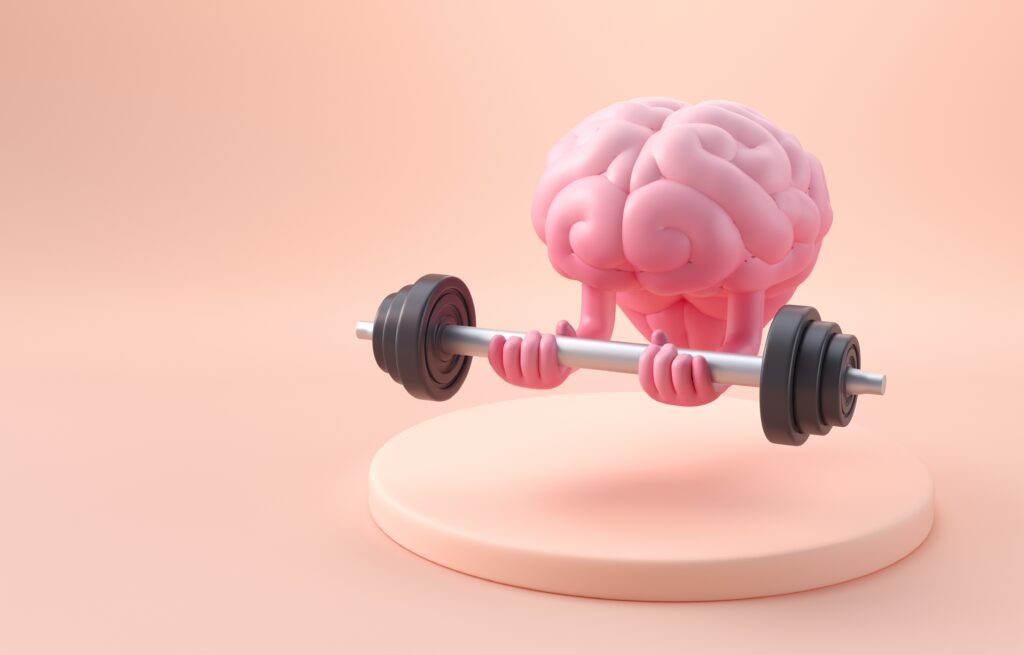 Strength training trains the brain